Built to Last: The Remarkable Story of the Aircraft That Remade Modern Aviation
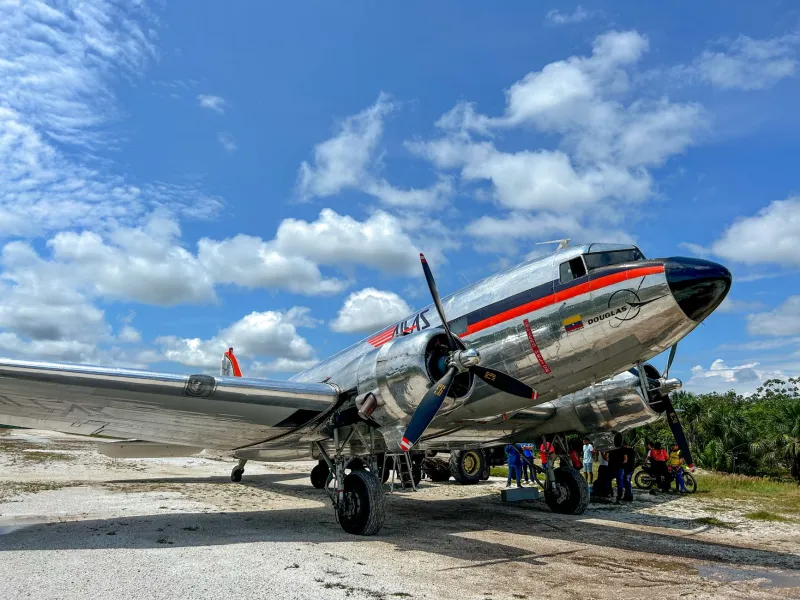
Few machines in the history of human engineering have left as enduring a mark as the Douglas DC-3. Conceived as a sleeper transport for transcontinental travelers, it became the backbone of Allied air logistics in World War II — and nearly nine decades later, examples of this legendary aircraft continue to take to the skies. At World Heritage Air Museum, we believe the DC-3 represents something rare in technological history: a design so fundamentally correct that the world simply could not improve upon it fast enough to make it obsolete.
From a Hotelier's Request to Aviation History
The DC-3's origin story begins not in an engineering laboratory but in a business negotiation. In 1934, Cyrus Rowlett Smith, president of American Airlines, placed a phone call to Donald Douglas of the Douglas Aircraft Company. Smith wanted something the aviation industry had never produced: a sleeper aircraft capable of turning a profit on transcontinental routes without a government mail subsidy. Douglas's team delivered the Douglas Sleeper Transport — a fourteen-berth aircraft that could carry passengers from New York to Los Angeles in roughly sixteen hours, with a brief refueling stop.
The day-passenger variant, designated the DC-3, entered scheduled service with American Airlines on June 26, 1936. Within two years, it carried approximately 95 percent of all commercial air traffic in the United States. The numbers tell a story that no amount of prose can fully capture: the DC-3 made air travel economically viable for the first time in history. Prior to its introduction, airlines depended on government airmail contracts to survive. The DC-3 changed the fundamental arithmetic of commercial aviation by filling enough seats at a low enough operating cost to generate genuine profit from passenger revenue alone.
Engineering That Defined an Era
To understand why the DC-3 succeeded where its predecessors struggled, one must examine its engineering with some care. The aircraft featured a semi-monocoque fuselage — a construction method in which the outer skin bears a significant share of structural loads — that was both lighter and stronger than earlier designs. Its two Pratt & Whitney Twin Wasp or Wright Cyclone radial engines offered reliable power without the maintenance demands that had plagued earlier powerplants. Crucially, the DC-3 incorporated retractable landing gear, variable-pitch propellers, and wing flaps, technologies that collectively transformed its performance envelope.
Passengers noticed the difference immediately. Compared to the Ford Trimotor, which vibrated with enough intensity to rattle teeth, or the Boeing 247, which required passengers to climb over a structural spar running through the cabin, the DC-3 felt positively refined. The cabin was heated, soundproofed to a degree previously unknown in commercial aviation, and wide enough to seat two passengers on each side of a central aisle with genuine comfort. For the first time, ordinary Americans — not just the wealthy — could consider air travel a reasonable alternative to the transcontinental train.
The Uniform That Won a War
When the United States entered World War II following the attack on Pearl Harbor in December 1941, the military turned almost immediately to the DC-3's airframe. Militarized variants — designated the C-47 Skytrain by the Army Air Forces and the R4D by the Navy — became the workhorses of Allied logistics. General Dwight D. Eisenhower reportedly listed the C-47 among the four pieces of equipment most critical to Allied victory, alongside the bazooka, the jeep, and the atomic bomb.
The statistics of the C-47's wartime service are staggering. More than 10,000 military variants were manufactured during the war years. They dropped paratroopers over Normandy on the night of June 5–6, 1944, flew supplies over the Himalayan "Hump" between India and China, and sustained the Berlin Airlift of 1948–1949 after the war's conclusion. Soviet forces flew a licensed copy, the Lisunov Li-2, in enormous numbers on the Eastern Front. The Japanese produced their own variant, the Showa L2D, which Allied forces nicknamed "Tabby." No other aircraft of the era achieved such broad adoption across so many nations and theaters of operation.
Why the DC-3 Refused to Retire
The postwar era brought faster, pressurized aircraft — the Lockheed Constellation, the Douglas DC-6, and eventually the jet age — yet the DC-3 refused to disappear. Its operating economics remained compelling for smaller carriers, remote operators, and developing-world airlines that could not afford newer equipment. In Alaska, the bush aviation community embraced the type with particular enthusiasm, fitting floats and tundra tires to aircraft that had originally carried passengers in business suits.
Today, the Federal Aviation Administration estimates that several hundred airworthy DC-3s remain registered worldwide, with dozens based in the United States. Operators in Africa, South America, and the Caribbean continue to use them for cargo and passenger service on routes where newer aircraft would be economically impractical. This longevity is without parallel in commercial aviation history. No other transport aircraft designed before the jet age has remained in active service for anything approaching the DC-3's operational lifespan.
Preservation and the Museum Imperative
For institutions dedicated to preserving aviation heritage, the DC-3 presents both an opportunity and a responsibility. As the surviving population of airworthy examples gradually declines through accidents, the inevitable deterioration of airframes, and the growing scarcity of qualified mechanics trained on radial engines, the window for preservation is narrowing. Several museums across the United States maintain DC-3s in flying condition, recognizing that a static display, however beautifully restored, cannot fully communicate the experience of an aircraft whose genius was inseparable from its function.
At World Heritage Air Museum, we view the DC-3 as a cornerstone of the story we are charged with telling. It represents the moment when aviation ceased to be a novelty and became a necessity — when the sky became, for ordinary Americans, a legitimate pathway between cities and coasts. Preserving this aircraft means preserving the memory of that transformation, and ensuring that future generations can understand, in concrete rather than abstract terms, how profoundly a single engineering achievement can reshape the world.
The DC-3 did not merely carry passengers and cargo. It carried an entire civilization into the modern age of mobility. That legacy deserves nothing less than our most dedicated efforts at preservation.